
Crop coverage

Ten crops define the first diagnostic library.

The initial catalogue focuses training, validation and field testing on crops widely grown in Nigeria. Each crop can contain disease, pest, nutrient-deficiency and visible-stress classes.

๐ŸŒฝ Maize

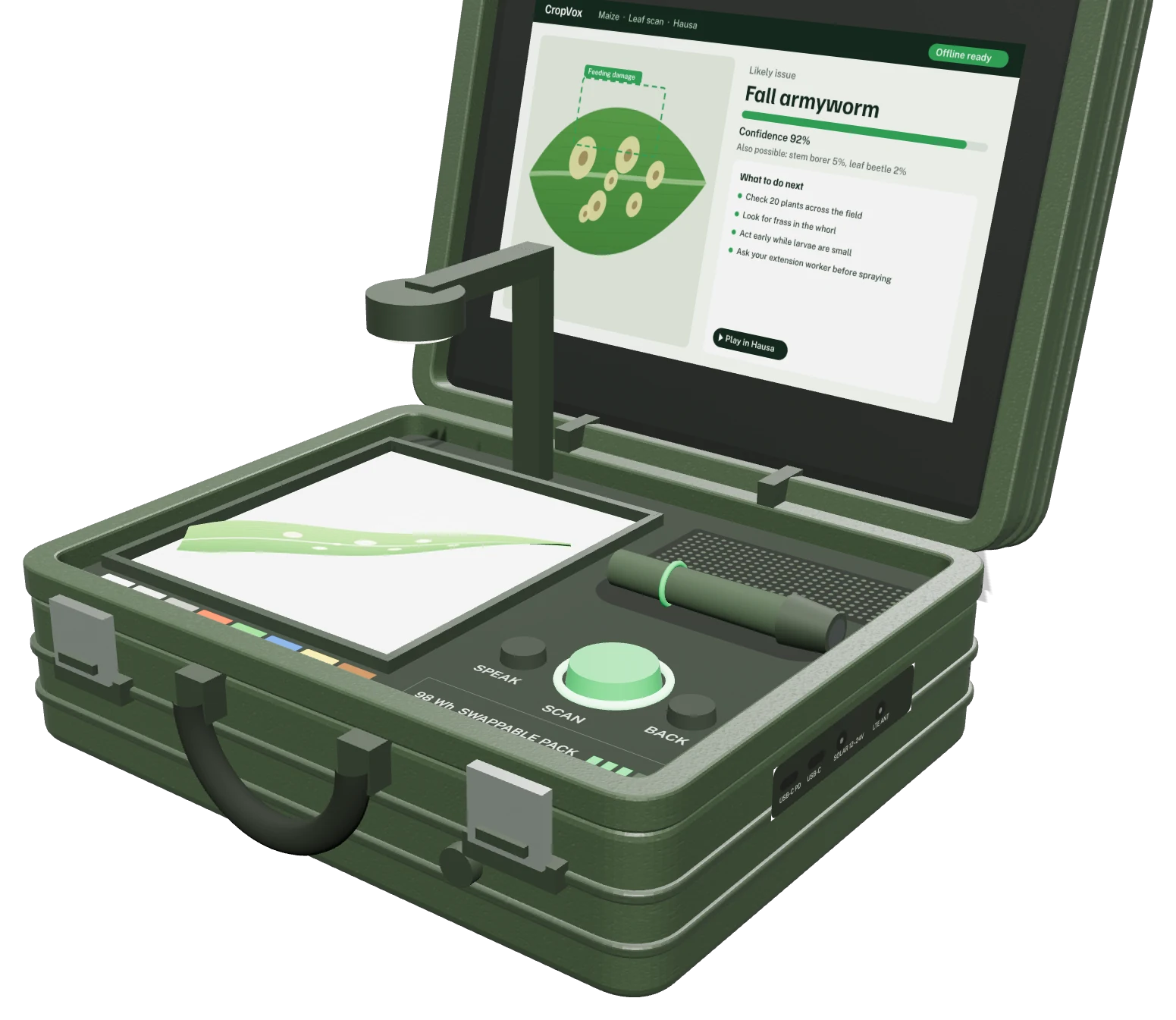
Initial targets can include fall armyworm damage, leaf blight, rust, maize streak symptoms and nutrient deficiencies.

๐ŸŒฟ Cassava

Initial targets can include cassava mosaic symptoms, bacterial disease, mite damage and visible nutrient or water stress.

๐ŸŒพ Sorghum

Leaf diseases, anthracnose-like symptoms, smuts, pests and deficiency patterns.

๐Ÿซ˜ Cowpea

Leaf spots, mosaic-like symptoms, aphid damage, pod damage and visible nutrient stress.

๐ŸŒพ Rice

Blast, bacterial leaf blight, brown spot and nutrient-deficiency patterns.

๐ŸŒพ Millet

Downy mildew, smut, ergot-like symptoms and pest damage.

๐Ÿ  Yam

Anthracnose, viral symptoms, leaf spots and insect damage.

๐Ÿฅœ Groundnut

Early and late leaf spots, rust, rosette-like symptoms and nutrient stress.

๐ŸŒฑ Cocoyam

Leaf blight, leaf spots and visible stress or deficiency patterns.

๐ŸŒฑ Sesame

Leaf spot, phyllody-like symptoms, wilt and visible pest damage.

Field data

Real farm conditions are part of the training problem.

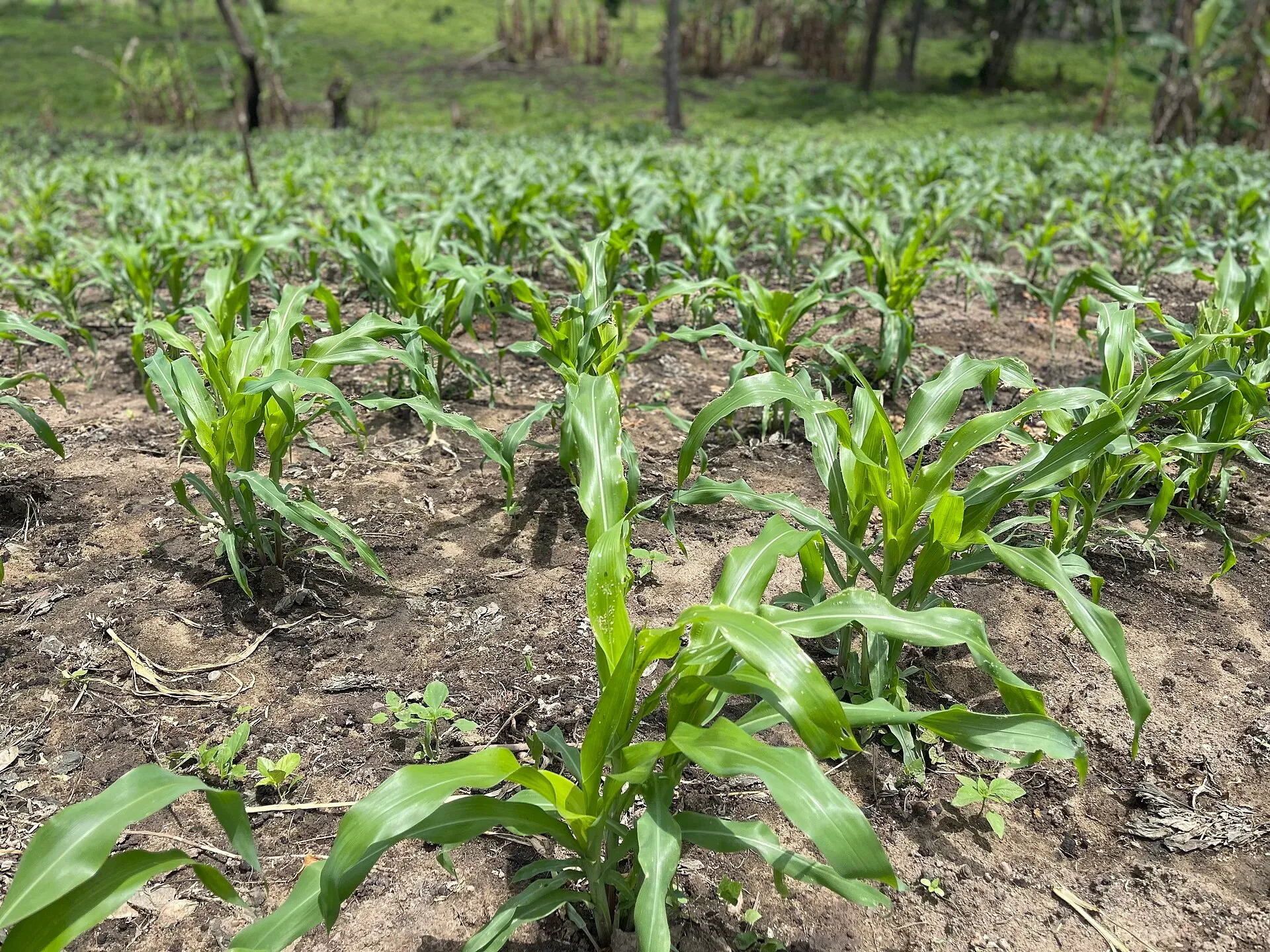
Useful vision models need images with sunlight, shadows, overlapping leaves, different crop stages, low-cost cameras and mixed damage patterns. CropVox is structured around field validation rather than clean leaf images alone.

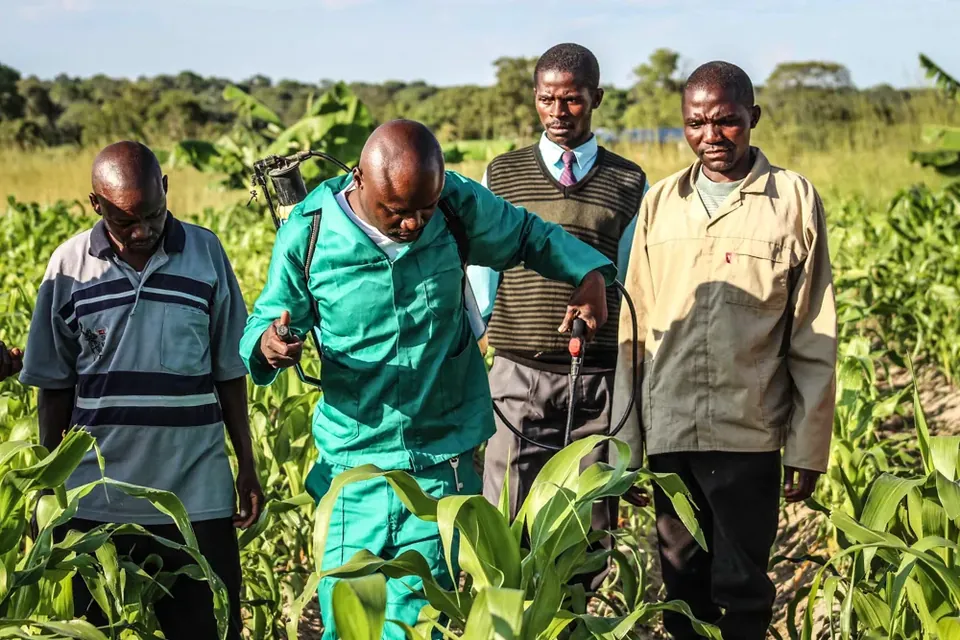
Maize farmer, CC0 public-domain photograph
Field imagery

Maize

Outdoor images help expose lighting and background variation.

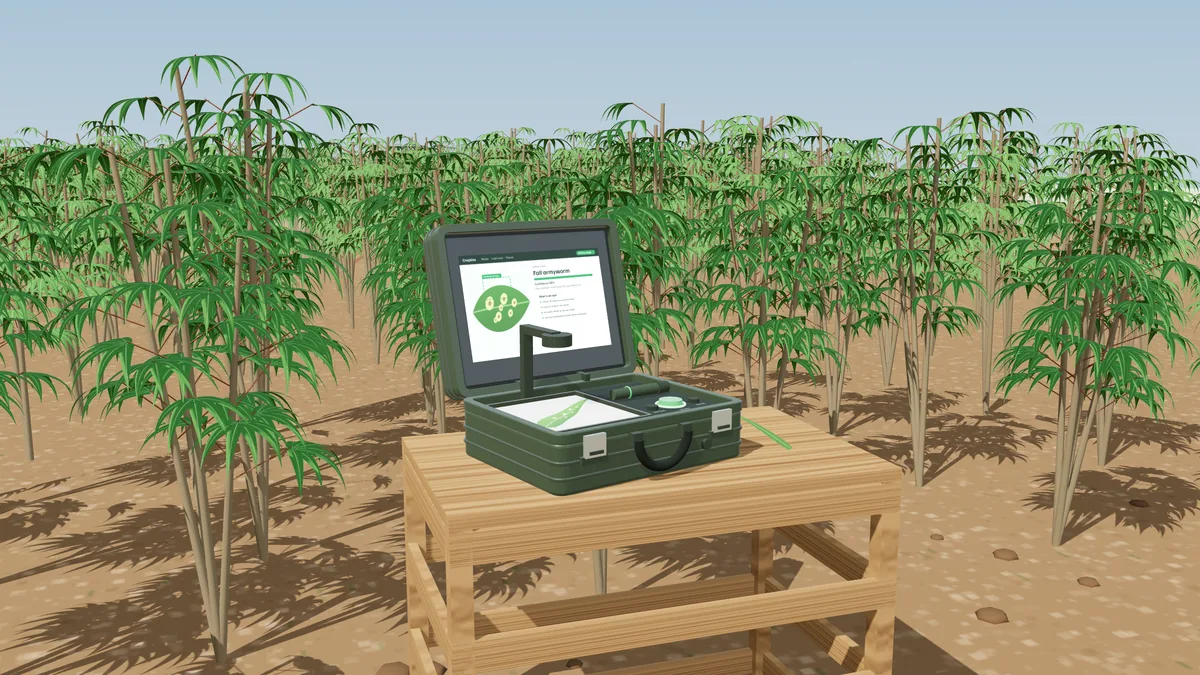
Cassava field, CC0 public-domain photograph
Field imagery

Cassava

Whole-plant and leaf-level views can both matter.

Pepper plants, CC0 public-domain photograph
Field context

Variable environments

Natural backgrounds make validation more realistic.